Oakley Costs Less Than Brentwood. The Tax Bill Doesn't Always Agree.
September 24, 2026
September 24, 2026
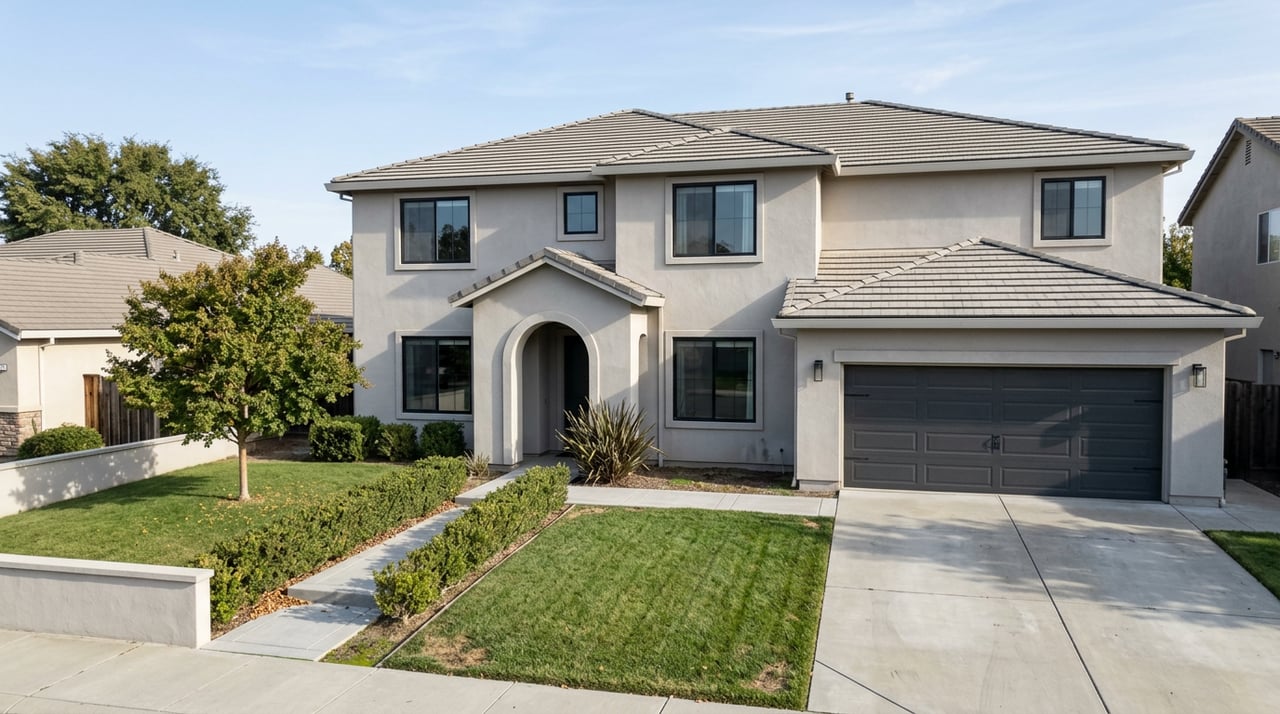
Ask anyone comparing Oakley to Brentwood on price alone and you'll hear the same line: same commute, same schools split, a hundred grand less for the house. That comparison holds for a lot of Oakley's resale stock. It gets shakier the moment you're standing in a new-construction model home, because the tax line on that listing sheet is doing something the older neighborhoods a few streets over aren't.
The mechanism is a special tax district the City of Oakley created in 2015, and it has quietly folded new subdivisions into itself ever since. If you're comparing Oakley to its pricier neighbors using median price alone, you're missing half the math.
California's base property tax is capped at 1% of assessed value under Proposition 13, plus small local overrides that usually land the effective rate somewhere between 1.1% and 1.3%. That's the number most buyers carry in their head when they run the math on a new house.
Oakley's citywide median effective property tax rate is 1.55%, according to a recent analysis by Ownwell, a property tax firm that tracks Contra Costa County parcels. That's higher than California's statewide median of 1.21% and well above the national median of 1.02%. Blended across a whole city, that's a meaningful gap. It's also a blended number, which means it's hiding something: older Oakley isn't paying 1.55%. Newer Oakley is paying more than that to make the average come out where it does.
Industry data on Mello-Roos districts backs this up at the pattern level. In ZIP codes with heavy Community Facilities District (CFD) coverage, effective property tax rates commonly run 1.5% to 1.7% of purchase price, compared to 1.1% to 1.3% in areas without a CFD. Here's what that spread looks like on an illustrative $600,000 purchase, just to make the math concrete:
| Effective rate | Annual tax | Monthly | |
|---|---|---|---|
| Non-CFD pocket | 1.1% – 1.3% | $6,600 – $7,800 | $550 – $650 |
| CFD-stacked new subdivision | 1.5% – 1.7% | $9,000 – $10,200 | $750 – $850 |
That's a $150 to $300 monthly gap on an identical price tag, driven entirely by which side of a subdivision boundary the parcel sits on. It doesn't show up on a listing photo. It shows up on the first tax bill after closing.
The specific mechanism doing this work in Oakley is City of Oakley Community Facilities District No. 2015-2, a special tax district covering parks, streetlight, landscape, and stormwater services. It was formed in 2015 and recorded with Contra Costa County that November. Since then, the city has amended it through at least Annexation No. 32, which folded in a commercial parcel at Bridgehead Road and Main Street, home to a Wendy's, into the district's Tax Zone 22.
That annexation record, filed with the city and recorded with the county, is worth understanding on its own terms.
Each time the city approves a new subdivision or commercial project, it has the option to annex that property into the existing CFD rather than stand up a brand new tax district from scratch. Thirty-two annexations later, the district has grown alongside the city itself.
This matters for a reason that isn't obvious from the name. Most people who've heard of Mello-Roos picture the kind tied to a construction bond: a fixed 20 to 40 year term that expires once the debt is paid off. Oakley's CFD 2015-2 isn't financing a bond. It's funding ongoing maintenance and services. Under California law, the services portion of a Mello-Roos tax can continue indefinitely, because the costs of maintaining parks, streetlights, and stormwater systems don't stop when construction wraps up. There's no natural sunset date built into this particular structure the way there is for a bond-funded infrastructure CFD elsewhere in the state.
Oakley's building activity hasn't slowed just because the citywide comparison to Brentwood gets more attention. Summer Lake remains the most recognized master-planned community in the city and tends to be the first stop for families touring Oakley, and builders like De Nova Homes have been active on the city's north side with new communities that compete directly with Brentwood's newer housing stock.
The city's current projects list shows the pipeline is still moving. Ponderosa Homes II has a pending map to subdivide roughly 50 acres into 176 single-family lots with a park and detention basin. Discovery Builders has been working through design review on the Pheasant Meadows and Vintner View subdivisions along O'Hara Avenue, homes ranging from about 2,071 to 3,166 square feet. On the commercial side, the Emmerson Ranch corridor near Cypress Road and Sellers Avenue has been adding a gas station, car wash, and retail pads, the kind of commercial growth that tends to travel with residential annexations into districts like CFD 2015-2.
None of this means every one of these specific projects carries the exact same tax zone assignment. What it does mean is that the pattern behind the Bridgehead Road annexation, new development folding into an existing recurring services tax rather than sitting outside it, is the live, ongoing mechanism shaping what new Oakley buyers actually pay, right now, in the same corridors where builders are actively pulling permits.
Older Oakley homes, the kind built before 2015 or outside any annexed tax zone, don't carry this line item at all. Their effective tax rate tracks closer to the standard 1.1% to 1.3% that Contra Costa County buyers expect. That's the version of Oakley most price comparisons to Brentwood are quietly built on, because resale inventory dominates the market and resale inventory is disproportionately older stock.
New construction is a different animal. A buyer comparing a new Oakley build to a comparably priced new Brentwood build needs to run both tax bills, not just both price tags, because Brentwood runs its own set of four Community Facilities Districts under the same 1982 state law, and the two cities' new-construction tax stacks won't automatically match just because the sticker prices are close.
The gap between Oakley and its neighbors on price is real. The gap in what you actually carry every month, once the tax bill is included, is smaller in some pockets and larger in others, and the only way to know which one you're looking at is to check the specific parcel.
A few minutes of due diligence answers the question a listing sheet won't.
Ask for the current tax bill, not the disclosure. A seller's disclosure will tell you a CFD exists. It won't always tell you the current year's dollar amount or whether the district's board voted to levy below the maximum authorized rate, which happens more often than buyers expect.
Confirm the tax zone, not just the district name. CFD 2015-2 covers multiple tax zones with different rates depending on when a parcel was annexed. Two houses in the same subdivision can carry different amounts if they were annexed in different phases.
Ask whether it's a bond CFD or a services CFD. A bond-funded infrastructure tax has a fixed payoff date. A services tax, like the parks and stormwater maintenance covered under CFD 2015-2, doesn't have the same built-in expiration, and that changes how you should think about the tax over a 10 or 20 year hold.
Run the effective rate, not just the base rate. Take the total annual property tax bill, including any CFD line items, and divide by the purchase price. That's the number that actually belongs in your monthly budget comparison against a Brentwood or Antioch alternative.
Does every new home in Oakley carry a CFD tax? No. It depends on which subdivision map the parcel was recorded under and whether that map was annexed into CFD 2015-2 or another district. Some infill lots inside the same ZIP code fall outside any CFD boundary entirely.
Does the tax eventually go away? It depends on what the district is funding. Bond-financed infrastructure CFDs typically retire after 20 to 40 years once the debt is paid off. A services-only district like CFD 2015-2, built around ongoing parks, streetlight, landscape, and stormwater maintenance, can continue for as long as the city keeps levying it, because state law allows the services portion of a Mello-Roos tax to run indefinitely.
Can I negotiate the CFD tax out of the deal? No. It's tied to the parcel, not to the buyer or the transaction, so it transfers with the property regardless of who signs the offer. What you can negotiate is the purchase price, with the tax stack factored into your monthly cost comparison from the start.
If you're weighing an Oakley new build against something in Brentwood or Antioch and want the actual tax zone pulled before you write an offer, that's exactly the kind of parcel-level digging our team does for every client. Reach out to Kevin Vierra and the Sold Buy Team and get your instant home valuation, plus the real numbers behind it, before you make your next move.
Stay up to date on the latest real estate trends.

Experience the finest in real estate service with a proven track record of satisfied clients who recommend us to their circle. Our mission is your success, as we prioritize your needs and ensure a seamless buying or selling experience. Trust us as your reliable partner, and let's make your real estate goals a reality.