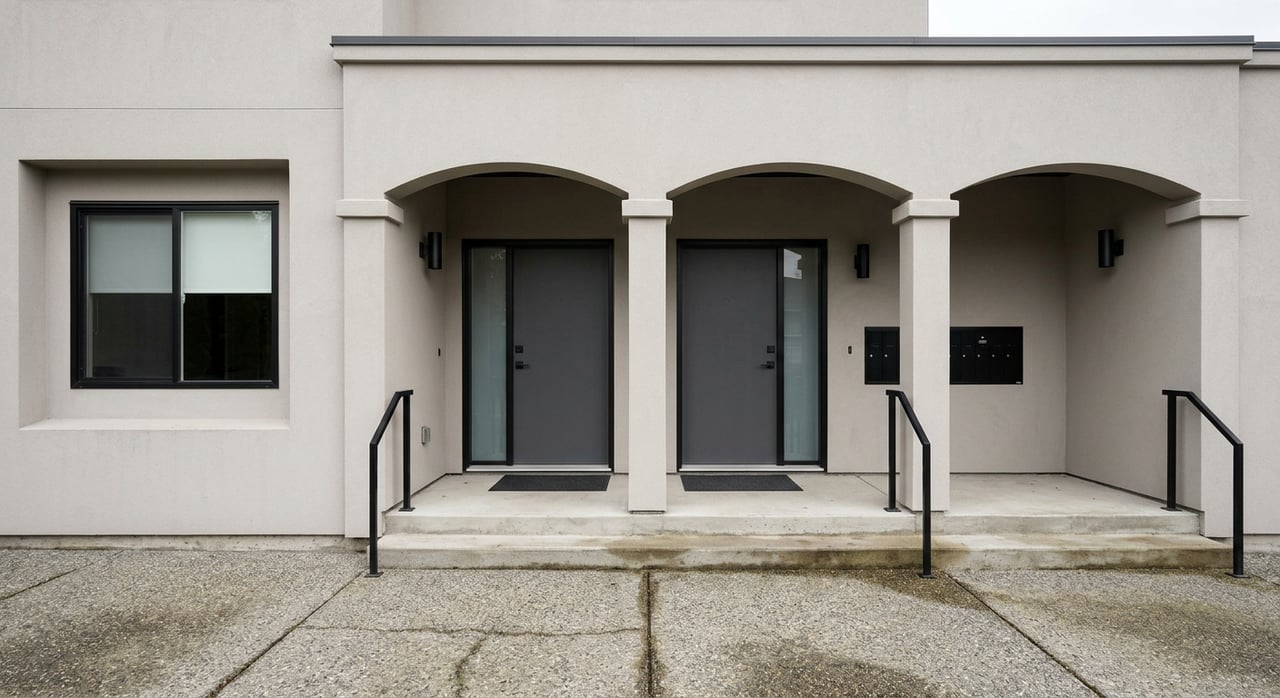
How to Evaluate Pittsburg Multifamily Investment Opportunities
April 2, 2026
April 2, 2026
If you are looking at duplexes, triplexes, or fourplexes in Pittsburg, it is easy to focus on list price and rent potential first. But in this market, the better question is whether a property’s income, zoning status, and repair needs actually support a solid long-term investment. With the right approach, Pittsburg can offer meaningful opportunity for small multifamily buyers who want commuter-driven demand and more attainable pricing than many core Bay Area locations. Let’s dive in.
Pittsburg stands out as a commuter-oriented city in East Contra Costa County with a sizable renter base and rent levels that can support small multifamily underwriting. According to Census Reporter’s Pittsburg profile, the city has 25,940 housing units, a 62.3% owner-occupied rate, a median gross rent of $2,264, and a median owner-occupied home value of $597,900.
That matters if you are comparing Pittsburg to more expensive Bay Area markets. You are still buying into a location with strong regional connectivity, and the city highlights its access to two BART stations and a short ride toward San Francisco. For many renters, that commuter access is a key part of the appeal.
Small multifamily investing works best when you understand both the renter profile and the income profile behind the market. Pittsburg’s median household income is $88,761, with about 3.0 persons per household, based on Census Reporter data.
That household size is especially important. Larger average households can support demand for practical two-bedroom and three-bedroom layouts, which often fit the local renter base better than very small units. If you are evaluating a property with family-sized units, that may align better with real market demand than assuming a heavy studio or one-bedroom audience.
Current asking rents show that Pittsburg is not a bargain rental market. Zillow’s rental market trends for Pittsburg show an average rent of $2,650 as of March 27, 2026, with 115 active rentals and a market labeled “Warm.” Zillow also reports average rents of about $1,895 for one-bedrooms, $2,402 for two-bedrooms, $3,000 for three-bedrooms, and $3,450 for four-bedrooms.
That rent structure creates a useful framework for underwriting. If you are buying a duplex, triplex, or fourplex with larger units, there may be a strong case for stable tenant demand, especially when the unit mix lines up with common household sizes in Pittsburg.
Public rent benchmarks reinforce that point. The county’s 2025 HOME rent maximum sheet lists Fair Market Rent at $2,201 for a one-bedroom, $2,682 for a two-bedroom, $3,432 for a three-bedroom, and $4,077 for a four-bedroom. A clean, well-maintained unit can be relevant to both market-rate tenants and voucher-supported demand.
A small multifamily investment is easier to defend when vacancy is not overly loose. The Bay Area Census portal shows that in the 2020 Census, Pittsburg had 24,078 housing units, with 23,370 occupied and 708 vacant. Of those vacant units, 385 were for rent.
A newer county planning document describes Pittsburg as having about 22,400 housing units, roughly 20,900 occupied, and about 1,500 vacant, while noting that nearly 20% of the housing stock was built since 2000. Because these figures come from different years, they are best read as directional rather than directly comparable. Still, the bigger picture suggests a market that is not flooded with excess rental inventory.
For many buyers, the sweet spot in Pittsburg is the small multifamily category itself: duplexes, triplexes, and fourplexes. These properties can offer multiple income streams without crossing into the heavier regulatory and operational lift that often comes with larger projects.
The city’s zoning framework is especially important here. Under the Pittsburg zoning code, duplexes and multifamily dwellings such as triplexes and fourplexes may remain in single-family residential districts if they already existed when the code took effect, while the RM district is intended for multifamily residences and the RH district supports more intensive multifamily use.
That means older small multifamily properties can be attractive, but only if you confirm how they fit within current zoning. A deal can look strong on paper and still become risky if the legal unit count or conforming status is unclear.
One of the clearest line items for investors in Pittsburg is the jump in regulatory requirements at five or more units. The city’s inclusionary housing chapter applies to residential projects entitling five or more dwelling units.
For smaller properties, that can make duplexes through fourplexes easier to analyze and operate. It does not eliminate due diligence, but it can reduce some of the complexity tied to larger development or repositioning strategies.
The biggest underwriting risk in Pittsburg is often not rent. It is condition. Contra Costa County’s draft 2025–2030 Consolidated Plan for Pittsburg says nearly 80% of the housing stock was built before 2000.
For you as an investor, that should immediately raise questions about roofs, plumbing, electrical systems, HVAC components, sewer lines, and turnover costs. An older building with below-market rents may look like a value-add opportunity, but deferred maintenance can quickly narrow or erase that upside.
This is why cap rate alone is not enough. You need to test reserves, estimate near-term capital expenses, and look closely at the real cost of bringing units to a competitive standard.
Pittsburg has a mandatory rental inspection program for most non-owner-occupied residential rental units. That makes registration, inspections, and code compliance a normal part of ownership, not a rare issue.
This is not necessarily a negative. It just means your operating plan should include regular compliance and responsive maintenance. If you buy an older duplex or fourplex, you want clear records, a realistic repair budget, and confidence that the unit count and condition will hold up under review.
In Pittsburg, unit mix can matter as much as location. The Bay Area Census household data shows that two-person households were the most common, followed by three-person households.
That gives you a practical takeaway. In many cases, two-bedroom and three-bedroom units may be more durable performers than studios, especially if you are trying to reduce turnover risk and serve the actual household profile in the market.
This does not mean every larger unit will outperform. It means your underwriting should follow local demand patterns instead of relying on a generic investment playbook.
Pittsburg’s housing policy environment is active, which matters if you are considering future improvements or additional units. The city says its 2023–2031 Housing Element was certified in October 2024 and is now being implemented. The city also launched an ADU rebate program in 2025 with incentives of up to $15,000 plus permit-ready plans.
For small multifamily investors, this may point to opportunity, especially on properties with enough site utility or redevelopment potential. Still, any addition, conversion, or expansion should be reviewed carefully for zoning, permitting, and design requirements before you build those assumptions into your numbers.
If you are serious about investing in Pittsburg small multifamily, a disciplined checklist will usually serve you better than chasing the highest advertised return. Focus on the items that most directly affect income durability and ownership risk.
Here are the most useful filters to apply:
These steps can help you avoid the most common mistakes buyers make when they evaluate older income property in a tighter rental market.
Pittsburg can make sense for small multifamily investors who want East Contra Costa exposure, commuter-driven rental demand, and pricing that may feel more approachable than many central Bay Area markets. But the strongest opportunities are usually not the ones with the flashiest pro forma. They are the properties where legal status, condition, rent durability, and layout all line up.
If you want help evaluating a duplex, triplex, or fourplex in Pittsburg, Sold Buy Team can help you compare opportunities, assess local market fit, and move forward with a clearer strategy.
Stay up to date on the latest real estate trends.
Experience the finest in real estate service with a proven track record of satisfied clients who recommend us to their circle. Our mission is your success, as we prioritize your needs and ensure a seamless buying or selling experience. Trust us as your reliable partner, and let's make your real estate goals a reality.